

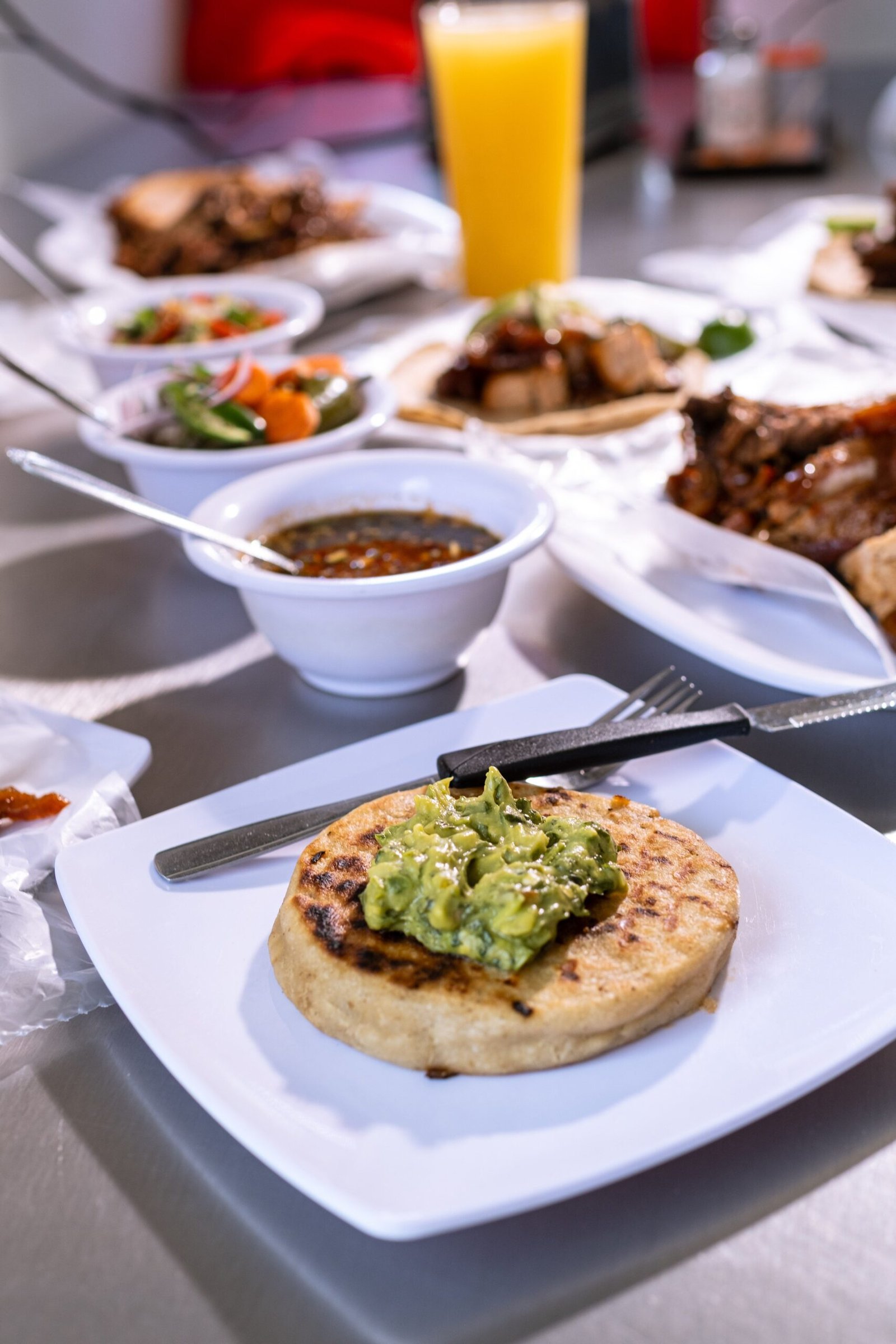
If you are looking for the best pupusas near me, you are looking for El Salvador’s national dish: thick corn cakes stuffed with cheese, beans or meat, cooked on a hot griddle until the outside is golden and the filling is melted. They are warm, comforting and deeply satisfying, and they are the first thing most people order at a Salvadoran restaurant. This guide explains what pupusas are, what goes in them, what curtido is, how they differ from arepas, where to find good ones near you, and how to make them at home when you cannot find one.
What Are Pupusas?
Pupusas are stuffed corn cakes from El Salvador, made from a dough of corn masa and water, filled, shaped by hand into a thick disc, and cooked on a hot griddle called a comal. The name comes from the Pipil language, and the dish is the national food of El Salvador, eaten at any time of day.
A pupusa is made by flattening a ball of masa dough, placing the filling in the centre, closing the dough around it, and flattening it again into a disc about the size of a small plate. It is cooked on a dry griddle for a few minutes on each side, until the outside is lightly golden and crisp in places and the filling inside is hot and melted.
The best pupusas near me are judged on the masa first. It should be soft and tender, not dry or crumbly, with a light corn flavour. Then comes the filling, which should be generous and melted, and the balance of the whole thing: a pupusa should be rich but not greasy, and it should hold together when you pick it up. That balance is what the best pupusas near me get right every time.
What Are Pupusas Made Of?
Pupusas are made of corn masa, water, salt and filling. The masa is made from corn flour, usually masa harina, mixed with warm water and a pinch of salt until it forms a soft dough. Some cooks add a little oil to the dough, which keeps it moist and stops it cracking.
The classic fillings are queso, a soft melting cheese, often mixed with loroco, a green flower bud that tastes a little like artichoke; frijoles, refried beans, usually mixed with cheese; and chicharron, seasoned ground pork, also usually mixed with cheese. A pupusa de queso is cheese only, a pupusa de frijoles con queso is beans and cheese, and a pupusa revuelta is the mixed one, with pork, beans and cheese together.
The pupusa is served with curtido, a pickled cabbage slaw, and salsa roja, a thin tomato sauce. The curtido is spooned on top or eaten alongside, and its sharpness cuts through the richness of the cheese and pork.
Classic Pupusa Fillings
The most popular filling is queso, and a pupusa de queso is the one to order first. The cheese should be a soft, mild cheese that melts well, such as quesillo or mozzarella. It should be melted and stretchy when you open the pupusa, not dry or rubbery.
Pupusas de queso con loroco add loroco, a green flower bud from Central America that is pickled or cooked and mixed with the cheese. Loroco has a mild, slightly herbal flavour, a little like artichoke or asparagus, and it is the most traditional filling of all. If a restaurant offers it, it is worth trying.
Chicharron is seasoned ground pork, cooked with tomato and onion and mixed with cheese. It is rich and savoury, and it is the filling in the pupusa revuelta, the mixed pupusa, which also contains beans. Beans and cheese is the gentlest filling, and it is the one most often ordered by people trying pupusas for the first time. The best pupusas near me are the ones where the filling is generous and the cheese is properly melted, whichever filling you choose.
What Is Curtido?
Curtido is a pickled cabbage slaw, and it is an essential part of eating pupusas. It is made from shredded cabbage, carrot, onion and sometimes jalapeño, lightly fermented or pickled in vinegar with oregano. It is sharp, crunchy and a little spicy, and it is served in a jar or a bowl on the table.
Curtido does for pupusas what pickles do for a sandwich: it cuts through the richness. A pupusa is warm, soft and cheesy, and the curtido adds crunch and acidity that keeps it from feeling heavy. It is spooned on top of the pupusa or eaten alongside, and most people use a lot of it.
Salsa roja is the other accompaniment: a thin, mild tomato sauce, sometimes with a little chilli, that is spooned over the pupusa. It is not a thick salsa, and it is not very spicy. Together, curtido and salsa roja are the complete pupusa experience, and a restaurant that serves pupusas without curtido is missing half the dish. If there is no curtido on the table, you have not found the best pupusas near me.
Pupusas vs Arepas
People often ask about the difference between pupusas and arepas, and the two dishes are cousins. Both are corn cakes from Latin America, and both are stuffed or topped, but they are made and served differently. Pupusas are from El Salvador, and they are stuffed: the filling is sealed inside the masa before cooking.
Arepas are from Venezuela and Colombia, and they are split open after cooking and filled like a sandwich, or topped. The arepa dough is also corn masa, but the arepa is usually thicker and the filling is added afterwards, so you can see it.
The other difference is the accompaniment. Pupusas are served with curtido and salsa roja. Arepas are served with a wide range of fillings, from cheese and avocado to shredded beef and black beans. Both are delicious, but if you want the best pupusas near me, look for a Salvadoran restaurant: a place that serves arepas will not necessarily serve pupusas.
How to Find the Best Pupusas Near Me
Finding the best pupusas near me takes a little looking, because pupusas are less common in the UK than many other street foods. Start with Salvadoran and Central American restaurants and cafes, then Latin American food markets and street food events. A restaurant where the pupusas are made by hand and cooked on a comal to order is a good sign.
Ask three questions before you order. First, are the pupusas made fresh by hand, or are they bought in? Second, is the curtido homemade, and is it fresh and crunchy? Third, which fillings are available: a good pupuseria will offer queso, beans and cheese, chicharron and loroco. If the answers are yes, yes and a proper list of fillings, you have probably found a good one. If the pupusas are dry and the curtido comes from a jar, keep looking for the best pupusas near me elsewhere.
Latin American food festivals and community events are often a good place to find the best pupusas near me, because the cooks there are usually making the food they grew up with. A small family-run Salvadoran cafe is worth more than a large restaurant that lists pupusas as one item among fifty.
How to Make Pupusas at Home
Making pupusas at home is very doable, and it is the best option when you cannot find the best pupusas near me locally. You need masa harina, warm water, salt, and your filling: grated mozzarella or quesillo, refried beans, or cooked seasoned pork.
Start with the dough. Mix masa harina with warm water and a pinch of salt until it forms a soft dough that holds together without cracking. It should feel like soft play dough: if it cracks, add a little more water. Let it rest for 10 minutes. While it rests, prepare the filling and the curtido, if you are making it.
Take a ball of dough about the size of a golf ball, flatten it in your palm, and place a spoonful of filling in the centre. Close the dough around the filling, pinch it shut, and gently flatten it into a disc about 1 cm thick, keeping your hands wet so the dough does not stick. Cook on a dry, hot griddle or a large frying pan for 3 to 4 minutes per side, until golden in places and cooked through. Serve hot, with curtido and salsa roja, and you will have pupusas that stand up to the best pupusas near me.
What to Eat with Pupusas
Pupusas are usually a meal on their own, so they do not need much alongside them. The essential partners are curtido and salsa roja, and they are served with every order. Two or three pupusas with plenty of curtido is a full meal for most people.
A simple salad or some sliced tomato and avocado goes well alongside, adding freshness. A cold drink is almost compulsory: a horchata, the sweet rice drink, is the classic partner, and a sparkling water with lime or a lager also works well.
If you are serving pupusas as part of a bigger meal, keep the extras simple. A bowl of black beans, some fried plantain and a green salad are enough, because the pupusas themselves are the main event. Do not serve them with heavy sauces or rich sides: the curtido is there for a reason.
Common Mistakes to Avoid
The most common pupusa mistake is a dough that is too dry. Masa dough that cracks when you flatten it will split open on the griddle and leak the filling. The dough should be soft and moist, and your hands should be wet when you shape the pupusas. Add water a little at a time until the dough is smooth.
The second mistake is overfilling. Too much filling will burst out during cooking, so use a modest spoonful and seal the dough properly. The third mistake is a griddle that is too cool, which leaves the pupusa pale and doughy, or too hot, which burns the outside before the inside is cooked. Medium-high heat, and a few minutes per side, is right.
The same mistakes apply when you are choosing where to eat. A restaurant that serves dry pupusas, cold curtido and no salsa roja will not give you the best pupusas near me, no matter how good the menu sounds.
How to Spot the Best Pupusas Near Me
When you are hunting for the best pupusas near me, a few signs tell you that you have found a good one. First, the masa: the best pupusas near me have soft, tender corn dough that holds together, not dry and crumbly. Second, the filling: the best pupusas near me are generously filled, with cheese that is melted and stretchy. Third, the curtido: it should be fresh, crunchy and sharp, made in-house, not from a jar. Fourth, the cooking: pupusas made by hand and cooked to order on a comal, not reheated. A place that gets all four right is where you will find the best pupusas near me.
What are pupusas made of?
Pupusas are made of corn masa, water and salt, filled with cheese, beans, pork or loroco, and cooked on a hot griddle. The masa is made from corn flour mixed with warm water. The classic fillings are queso (cheese), frijoles con queso (beans and cheese), chicharron (seasoned pork) and loroco (a green flower bud). They are served with curtido and salsa roja.
What is curtido?
Curtido is a pickled cabbage slaw made from shredded cabbage, carrot, onion and sometimes jalapeño, pickled in vinegar with oregano. It is sharp, crunchy and a little spicy, and it is served with pupusas to cut through the richness of the cheese and pork. It is spooned on top of the pupusa or eaten alongside.
Are pupusas gluten free?
Yes, pupusas are naturally gluten free, because they are made from corn masa, not wheat flour. The fillings are also usually gluten free. The risk is in the accompaniments and in the kitchen: always check that the curtido, salsa and cooking surface are free from cross-contamination if you need a guaranteed gluten-free meal.
What do you eat with pupusas?
Pupusas are eaten with curtido, a pickled cabbage slaw, and salsa roja, a thin tomato sauce. Two or three pupusas with plenty of curtido is a full meal. A simple salad, sliced avocado and a cold drink such as horchata or sparkling water go well alongside. That is the whole meal, and it is why the best pupusas near me need nothing more than curtido, salsa and a cold drink.
Where can I find the best pupusas near me?
The best pupusas near me are usually found at Salvadoran and Central American restaurants and cafes, Latin American food markets and street food events, especially places where the pupusas are made by hand and cooked on a comal to order. Look for soft masa, generous melted filling and fresh homemade curtido. Small family-run Salvadoran cafes are often the best bet.
What is the difference between pupusas and arepas?
Pupusas are from El Salvador and are stuffed: the filling is sealed inside the masa before cooking. Arepas are from Venezuela and Colombia, and they are split open after cooking and filled like a sandwich. Pupusas are served with curtido and salsa roja, while arepas are served with a wide range of fillings.
What is loroco?
Loroco is a green flower bud from Central America, used as a filling in pupusas, usually mixed with cheese. It has a mild, slightly herbal flavour, a little like artichoke or asparagus. A pupusa de queso con loroco is one of the most traditional fillings, and it is worth trying if a restaurant offers it.
Can I make pupusas without a griddle?
Yes. A large, heavy frying pan works well: cook the pupusas on a dry pan over medium-high heat for 3 to 4 minutes per side, until golden in places and cooked through. The key is a dry pan, the right heat and a soft, well-sealed dough, not any special equipment.
Whether you find the best pupusas near me at a Salvadoran cafe, a street food market or your own griddle, the rule is the same: soft masa, generous filling and fresh curtido. Get those three right and the dish takes care of itself. For more recipes, food guides and kitchen ideas, visit Pulse Streams.
