

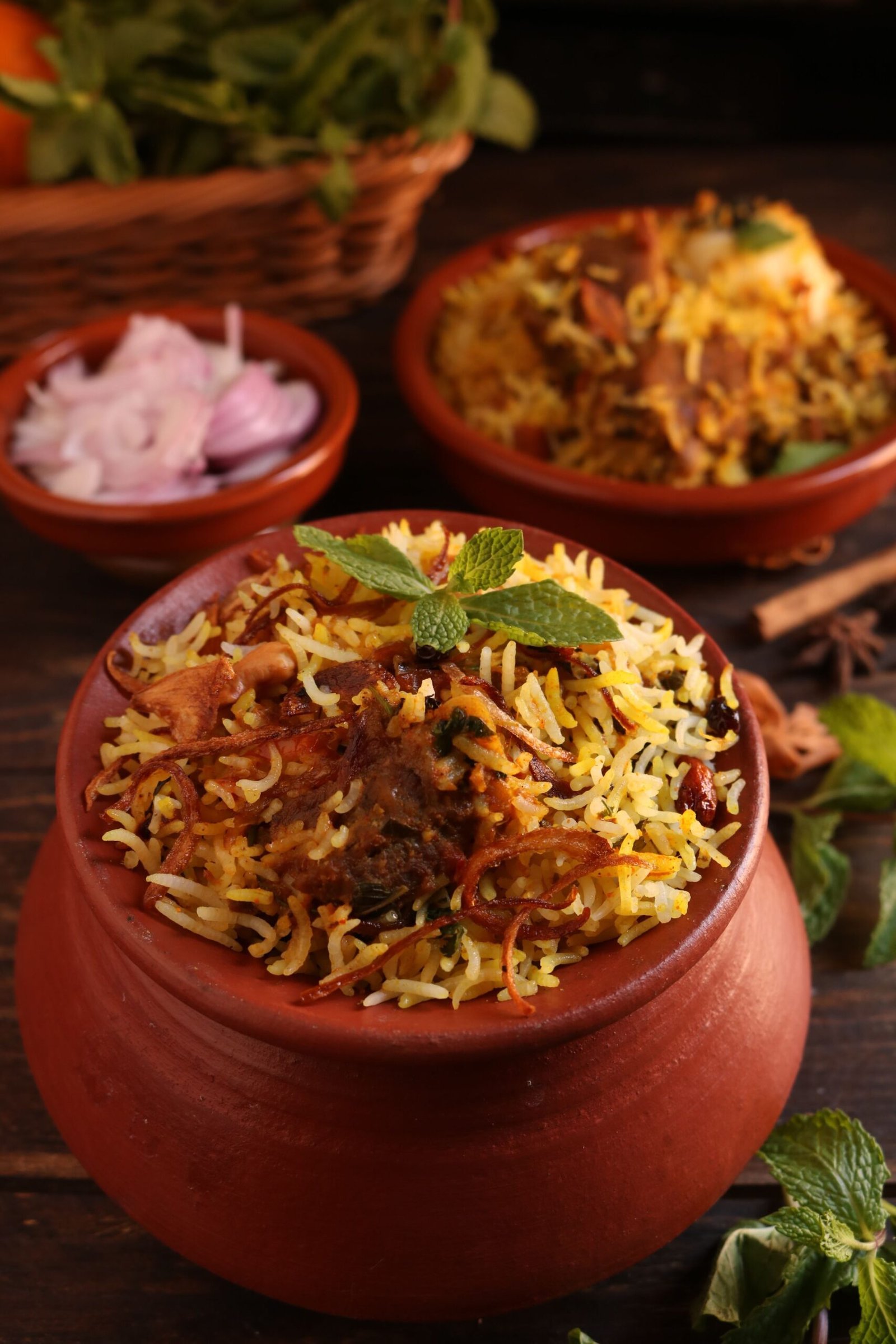
If you are looking for the best biryani near me, you are looking for one of the world’s great rice dishes: long-grained basmati rice layered with spiced meat or vegetables, sealed and slow-cooked so the flavours sink into every grain. It is fragrant, rich and deeply satisfying, and it is the dish most people order first at a South Asian restaurant. This guide explains what biryani is, the main styles, how it differs from pulao, where to find a good one near you, and how to make it at home when you cannot find one.
What Is Biryani?
Biryani is a layered rice dish from South Asia, made with basmati rice, meat or vegetables, and a mix of spices including saffron, cardamom, cloves, cinnamon and bay leaves. The rice and the meat are cooked separately, then layered in a heavy pot, sealed with dough or a tight lid, and finished on a low heat in a method called dum cooking. The steam does the final work, and when the lid comes off, the whole pot smells of saffron and spice.
Biryani has its roots in Mughal cuisine, the cooking of the Mughal courts of India, and it spread across the region as royal cooks travelled. Each city developed its own version, which is why there is no single biryani: Hyderabad, Lucknow, Sindh and Kolkata each claim their own style, and regulars argue fiercely about which is best.
The best biryani near me is judged on the rice first. Each grain should be long, separate and fragrant, never clumped or mushy. Then comes the meat, which should be tender and well spiced, and the balance of the whole pot: the spice should be warm and aromatic, not just hot. It is a dish that rewards patience, and the best biryani near me is always cooked slowly, never rushed.
What Is Biryani Made Of?
Biryani is made of basmati rice, meat or vegetables, yoghurt, onions and spices. The rice is aged basmati, which is long-grained and fragrant, and it is soaked and parboiled before layering so it finishes cooking in the pot without going soft. The meat is usually chicken, lamb or goat, marinated in yoghurt and spices.
The spice mix is the heart of the dish. It usually includes green and black cardamom, cloves, cinnamon, bay leaves, cumin, coriander and saffron, which is soaked in warm milk and drizzled over the layers to give the rice its golden colour and its perfume. Fried onions, called birista, are scattered through the layers and on top, adding sweetness and crunch.
The dish is finished with fresh herbs, usually mint and coriander, and sometimes with boiled eggs or fried potatoes, depending on the style. It is served with raita, a cooling yoghurt sauce, and often with mirchi ka salan, a spicy chilli and peanut curry that is the traditional partner to Hyderabadi biryani.
Hyderabadi Biryani
Hyderabadi biryani is the most famous style, and it is the one most people mean when they say they want the best biryani near me. It comes in two versions. In kacchi biryani, raw marinated meat is layered with parboiled rice and cooked together on dum, so the meat steams in its own juices. In pakki biryani, the meat is cooked first and then layered.
Hyderabadi biryani is spicy and bold. It uses green chillies, saffron, mint and fried onions, and it is usually made with chicken or mutton. The rice is fragrant and the meat is fiery, and the traditional accompaniment is mirchi ka salan and raita. If you like heat and big flavours, this is the style to order when you are hunting for the best biryani near me.
The dum seal matters more here than anywhere else, because the raw meat must cook through entirely in the sealed pot. A good Hyderabadi biryani is cooked on a very low heat for a long time, and the pot is not opened until it is ready. When the lid comes off, the rice should be separate and the meat should fall off the bone.
Lucknowi Biryani
Lucknowi biryani, also called Awadhi biryani, is the gentler cousin of the Hyderabadi style. It comes from the royal kitchens of Lucknow, and it is known for its subtlety rather than its heat. The spices are fragrant but restrained, the rice is delicate, and the meat is cooked until it is very tender.
The Lucknowi method is pakki: the meat is cooked first in a rich, lightly spiced gravy, then layered with rice and finished on dum. Saffron and rose water are often used, which gives the biryani a soft perfume. The result is a biryani that tastes of the spices without shouting about them.
If you prefer aromatic food to fiery food, Lucknowi biryani is the one to ask for, and for many people the best biryani near me is a Lucknowi one, because it suits the widest range of tastes. It is also the style most often served at weddings and formal occasions, because it is elegant and it suits a wide range of tastes. The best biryani near me for a first-timer is often a Lucknowi one, because its flavours are warm and welcoming rather than challenging.
Sindhi Biryani and Kolkata Biryani
Sindhi biryani is the spiciest of the main styles. It comes from Sindh, and it is known for its heat, its tang and its extras: green chillies, dried plums, and often potatoes and a generous amount of fresh coriander. It is a bold, sour-spicy biryani, and it is usually served with raita to cool it down.
Kolkata biryani is the most distinctive. It is lighter and sweeter than the others, with a subtle sweetness from the potatoes that are cooked in the rice, and sometimes a boiled egg. The story is that the potatoes were added when meat was expensive, and they became a signature of the style. Kolkata biryani uses less chilli and more fragrant spices, and it is known for its delicate yellow rice.
Both styles show how one dish can change from city to city. When you search for the best biryani near me, it is worth asking which style a restaurant cooks: a place that specialises in one style will usually do it better than a place that tries to cook all of them.
Biryani vs Pulao: What’s the Difference?
People often ask about the difference between biryani and pulao, and it comes down to how the dish is built. Biryani is layered: the rice and the meat are cooked separately, then layered in a pot and finished together on dum. Pulao is cooked in one pot: the rice is cooked in the same spiced stock as the meat or vegetables, absorbing the flavours as it cooks.
Biryani is also more richly spiced, with saffron, fried onions and a longer list of whole spices, while pulao is lighter and more subtle. Biryani is a celebration dish, made for weddings and festivals; pulao is an everyday dish, quicker to make and gentler in flavour.
When someone says they want the best biryani near me, they mean the layered dish, with separate grains of saffron rice and tender meat. If a menu offers a one-pot rice dish, that is a pulao, and it is a different thing, even if it is also delicious.
How to Find the Best Biryani Near Me
Finding the best biryani near me takes a little looking, because almost every South Asian restaurant sells one, and the quality varies widely. Start with restaurants that specialise in biryani or in the food of one region, such as Hyderabadi or Lucknowi restaurants. A restaurant that cooks its biryani on dum to order, or in limited batches each day, is a good sign.
Ask three questions before you order. First, which style is it, and is it cooked on dum? Second, is the rice aged basmati, and does it arrive as separate grains? Third, what is served with it: raita and mirchi ka salan are the traditional partners, and their quality tells you a lot about the kitchen. If the answers are yes, yes and yes, you have probably found a good one. If the rice is clumped and the meat is dry, keep looking for the best biryani near me elsewhere.
Areas with a large South Asian community tend to have the best biryani, because the customers know the difference. A restaurant that is busy at the weekend, with families ordering biryani by the pot, is one of the most reliable signs of all.
How to Make Biryani at Home
Making biryani at home is very doable, and it is the best option when you cannot find the best biryani near me locally. You need aged basmati rice, chicken or lamb, yoghurt, onions and spices. A heavy pot with a tight lid is essential for the dum stage.
Start by soaking the rice for 30 minutes, then parboil it in salted water with a few whole spices until it is about 70 percent cooked, then drain it. While the rice soaks, marinate the meat in yoghurt, ginger, garlic, chilli, garam masala and salt for at least an hour. Fry sliced onions until they are deep golden and crisp, and set them aside.
Cook the marinated meat in a little oil until it is mostly done, then layer it in the pot: a layer of meat, a layer of rice, a scattering of fried onions, mint and coriander, then repeat. Drizzle saffron soaked in warm milk over the top. Seal the pot with a tight lid, or with foil under the lid, and cook on the lowest heat for 25 to 30 minutes. Do not open the lid until the time is up: the steam is doing the work. Rest for 10 minutes, then serve with raita — and you will have a biryani that stands up to the best biryani near me.
What to Serve with Biryani
Biryani is usually a meal on its own, so it does not need much alongside it. The essential partner is raita, a cooling yoghurt sauce made with plain yoghurt, salt and chopped cucumber or onion. It balances the spice and the richness of the rice.
Mirchi ka salan, a spicy curry of green chillies in a peanut and sesame sauce, is the traditional partner to Hyderabadi biryani. It is hot and tangy, and a little goes a long way. A simple salad of sliced onion, tomato and lemon is also common, adding freshness and crunch.
A cold drink is almost compulsory: a lassi, a sparkling water, or a lager all work well. The best biryani near me needs nothing more than raita, salad and a cold drink. If you are serving biryani as part of a bigger meal, keep the extras simple. A kebab starter and some warm naan are enough, because the biryani itself is the main event.
Common Mistakes to Avoid
The most common biryani mistake is overcooking the rice. The rice should be parboiled until it is only about 70 percent done, because it finishes cooking in the sealed pot. If it is fully cooked before layering, the finished biryani will be mushy. The second mistake is a loose lid: dum cooking only works if the steam stays in the pot, so seal it tightly with foil or dough.
The third mistake is too little salt in the rice water, which leaves the whole dish bland. The rice should be seasoned well at the parboiling stage, because the spices in the layers cannot fix under-seasoned rice. And the fourth mistake is opening the lid too early, which lets the steam out and stops the cooking. Patience is part of the recipe.
The same mistakes apply when you are choosing where to eat. A restaurant that serves clumped rice, dry meat and no raita will not give you the best biryani near me, no matter how good the menu sounds.
How to Spot the Best Biryani Near Me
When you are hunting for the best biryani near me, a few signs tell you that you have found a good one. First, the rice: the best biryani near me has long, separate grains of fragrant basmati, never clumped or mushy. Second, the aroma: the best biryani near me smells of saffron and whole spices the moment the lid comes off. Third, the meat: it should be tender and well marinated, not dry or bland. Fourth, the accompaniments: proper raita and mirchi ka salan show that the kitchen cares about the whole dish. A place that gets all four right is where you will find the best biryani near me.
What is the difference between biryani and pulao?
Biryani is layered: the rice and the meat are cooked separately, then layered in a pot and finished together on dum, sealed so the steam does the final cooking. Pulao is cooked in one pot, with the rice absorbing the spiced stock as it cooks. Biryani is more richly spiced, with saffron and fried onions, while pulao is lighter and more subtle.
What is Hyderabadi biryani?
Hyderabadi biryani is the spicy, bold style from Hyderabad. It uses green chillies, saffron, mint and fried onions, and it is usually made with chicken or mutton. In kacchi biryani the raw marinated meat is layered with parboiled rice and cooked together on dum; in pakki biryani the meat is cooked first. It is traditionally served with mirchi ka salan and raita.
Is biryani gluten free?
Biryani itself is usually gluten free, because it is made from rice, meat, yoghurt and spices. The risk is in the extras: some spice mixes, stock cubes and fried onions can contain wheat, and naan served alongside it is not gluten free. Always ask the restaurant about their spice mix and preparation if you need a guaranteed gluten-free meal.
What do you serve with biryani?
Biryani is served with raita, a cooling yoghurt sauce, and often with mirchi ka salan, a spicy chilli and peanut curry. A simple salad of sliced onion, tomato and lemon adds freshness. It is a complete meal on its own, so it does not need much else.
Where can I find the best biryani near me?
The best biryani near me is usually found at restaurants that specialise in biryani or in the food of one region, such as Hyderabadi or Lucknowi restaurants, especially places that cook on dum in limited batches. Look for separate grains of aged basmati rice, tender meat, and proper raita and mirchi ka salan. Areas with a large South Asian community often have the best biryani.
What rice is best for biryani?
Aged basmati rice is best for biryani. It is long-grained and fragrant, and ageing makes the grains firmer, so they stay separate after cooking. Soak the rice for 30 minutes before cooking, parboil it until it is about 70 percent done, and let it finish in the sealed pot. Cheap short-grain rice will go mushy and will not give the right result. Get the rice right, and you are halfway to the best biryani near me.
What is dum cooking?
Dum cooking is a slow steaming method in which the layered biryani is sealed in a heavy pot with a tight lid, sometimes with dough around the rim, and cooked on a very low heat. The steam trapped inside finishes cooking the rice and the meat together, and the flavours blend without the dish drying out. The pot should not be opened until the cooking time is up.
How long does biryani keep?
Biryani keeps in the fridge for 2 to 3 days in a sealed container. Reheat it gently, sprinkled with a little water, covered, so the rice steams back to life. It also freezes well for up to a month, although the rice will be slightly softer after defrosting. Always cool it quickly and refrigerate it within two hours of cooking.
Whether you find the best biryani near me at a Hyderabadi restaurant, a family-run takeaway or your own kitchen, the rule is the same: fragrant separate rice, tender meat and a properly sealed pot. Get those three right and the dish takes care of itself. For more recipes, food guides and kitchen ideas, visit Pulse Streams.
