

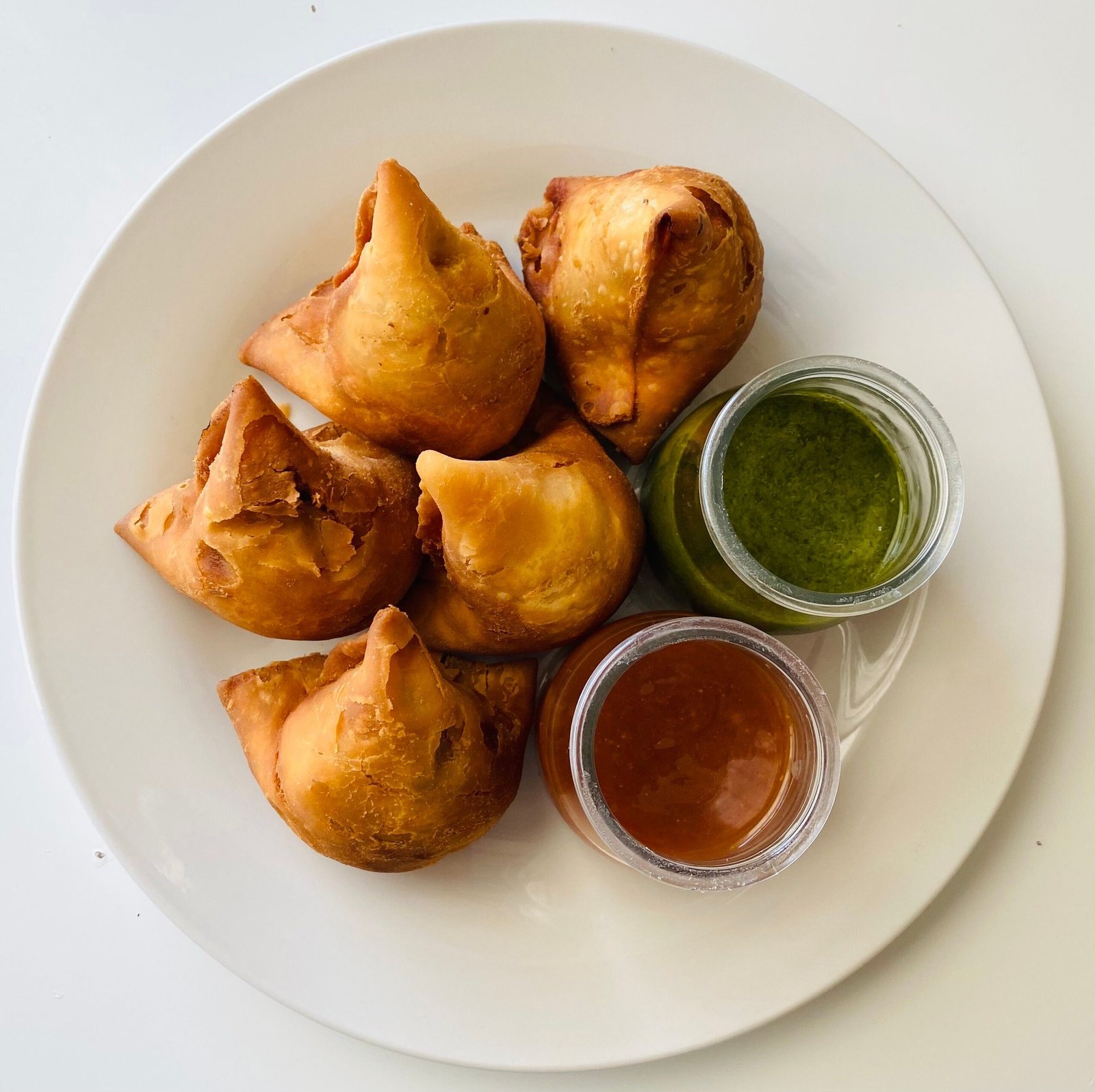
Searching for the best samosa near me is one of the simplest food hunts you can do, and one of the most rewarding when you get it right. A great samosa is crisp on the outside, steaming and well-seasoned on the inside, and served with chutneys that actually taste of something. A poor one is soggy, greasy, lukewarm, or filled with bland mash that tastes of nothing at all. The difference usually comes down to freshness, frying technique, and the quality of the filling — three things you can learn to judge in seconds, even before you take your first bite. This guide explains what to look for, which fillings and chutneys are worth trying, how to tell a fresh samosa from one that has been sitting under a heat lamp, and how to pick a good place to buy from, whether that is a takeaway counter, a street food stall, a bakery, or a restaurant.
What Is a Samosa?
A samosa is a fried or baked pastry with a savoury filling, folded into a triangle or cone shape and cooked until golden and crisp. It originated in the Middle East and Central Asia centuries ago and became one of the most loved snacks across South Asia, where it is now a fixture of street food stalls, tea shops, bakeries, and family gatherings. The classic filling is spiced potato and peas, seasoned with cumin, coriander, turmeric, garam masala, chilli, and fresh herbs, but samosas come in many forms. Meat versions use minced lamb, beef, or chicken; vegetable versions may add cauliflower, lentils, sweetcorn, or spinach; and sweet versions exist too, filled with khoya, nuts, or fruit.
The pastry is the first thing you notice. A good samosa has a thin, flaky, blistered crust that shatters slightly when you bite into it, rather than a thick, doughy shell. The filling should be moist but not wet, well-seasoned but not overpoweringly hot, and generous enough that every bite has both pastry and filling. When you are hunting for the best samosa near me, that balance of crisp shell and flavourful filling is the standard to judge everything against. That is why the search for the best samosa near me is really a search for that balance, made fresh and served hot.
What Makes a Great Samosa?
The best samosa near me is rarely the biggest or the cheapest — it is the one that gets the fundamentals right. First, the pastry must be crisp. That crisp shell is the first test of the best samosa near me, and it is the test most sellers fail. Crispness comes from frying at the right temperature in fresh oil: too cool and the pastry soaks up oil and turns soggy; too hot and it browns before the inside is cooked. Second, the filling must be seasoned all the way through, not just on the surface. You should be able to taste cumin, coriander, and a gentle warmth of chilli in every mouthful, with the potato holding its texture instead of turning to paste.
Third, the samosa should be hot and freshly fried. Samosas are at their best within minutes of leaving the oil, when the pastry is still crackling. Fourth, the chutneys matter. A good mint chutney should taste fresh and herby, a tamarind chutney should be sweet and tangy, and neither should taste like they came from a jar that has been open for a week. Finally, consistency counts: a place that fries small batches to order will almost always beat a place that fries a huge tray in the morning and sells from it all day. If you find a stall or shop where samosas sell out fast and are fried in small batches, you have probably found the best samosa near me for your area.
Samosa Fillings Explained
Potato and pea is the classic filling and the best starting point if you are trying a new place. It is the filling every good maker is judged on, and it tells you immediately whether the kitchen seasons its food properly. The potato should be cubed or lightly crushed rather than mashed smooth, the peas should still have a little bite, and the spices should be present but balanced — earthy cumin, warm coriander, a little heat, and a squeeze of lemon or a pinch of amchur (dried mango powder) for brightness.
Meat samosas are usually filled with keema — minced lamb, beef, or chicken cooked with onions, garlic, ginger, green chillies, and garam masala. A good keema samosa is juicy without being greasy, and the meat should be finely minced so the filling holds together. A good meat filling is another sign you have found the best samosa near me. Chicken samosas are often milder, while lamb samosas tend to be richer and more deeply spiced. If you enjoy heat, ask whether the meat filling is spicy, because recipes vary a lot between makers.
Other fillings worth trying include paneer samosas, where cubes of Indian cheese are folded through the potato; lentil samosas, which are earthy and filling; and mixed vegetable samosas with cauliflower, carrot, and sweetcorn. Some places make cheese and sweetcorn samosas, which are popular with children, and a few make sweet samosas filled with coconut, nuts, and sugar for dessert. When you are searching for the best samosa near me, trying two different fillings from the same place is a quick way to judge whether the kitchen is genuinely good or just lucky with one recipe.
Chutneys and Sauces That Matter
A samosa without a good chutney is only half a snack. The two classics are mint chutney and tamarind chutney. Mint chutney is made from fresh mint and coriander leaves, green chilli, lemon juice, and salt, blended into a bright green sauce. It should taste fresh and cooling, with a little kick. Tamarind chutney is sweet, sour, and sticky, made from tamarind pulp, jaggery or sugar, and a pinch of cumin. It adds a completely different flavour to the same samosa, so a place that serves both is giving you two experiences from one snack.
Many places also offer a yoghurt sauce, sometimes with a little garlic or mint stirred through, which cools the heat of a spicy samosa. Chilli sauce is common too, and its heat can range from gentle to fierce, so taste a little before pouring it on. Some stalls serve samosas with chopped onion, fresh coriander, and a squeeze of lemon instead of a sauce, which works well with a very fresh, hot samosa. The quality of the chutneys is a useful test when you are looking for the best samosa near me: if the chutneys are fresh, bright, and clearly homemade, the samosas are probably made with the same care. A place that serves fresh chutneys is usually a place where the best samosa near me is made with care, from the pastry to the plate.
How to Judge Freshness Before You Buy
Freshness is the single most important factor, and you can judge it before you spend anything. Look at the samosas on display. They should be golden brown, not pale and not dark, with a dry-looking surface rather than a shiny, oily one. If the pastry looks damp or the tray has a pool of oil underneath, the samosas have been sitting too long. Listen if you can: a freshly fried samosa crackles faintly as it cools, and a stall that fries in small batches will usually have the sound and smell of frying in the air.
Ask when the batch was fried. A good seller will tell you honestly, and many will offer to fry a fresh one for you if you are willing to wait a few minutes — that wait is almost always worth it. A seller who fries to order is the surest route to the best samosa near me. Watch the turnover: a stall with a queue and samosas selling quickly is a good sign, because nothing sits around. By contrast, a tray of samosas sitting under a heat lamp with no customers is a warning. The best samosa near me is very often the one fried most recently, not the one from the most famous shop.
Takeaway, Street Stall, Bakery or Restaurant?
Samosas are sold in all kinds of places, and each has its strengths. Street food stalls and market counters often fry in small batches and sell at high volume, which means the samosas are fresh and the turnover is fast. This is where many people find the best samosa near me, especially at lunchtime when the frying is constant. Bakeries and sweet shops are another good bet: they often make samosas in the morning and again in the afternoon, and their pastry tends to be thinner and more delicate.
Takeaway restaurants usually keep samosas as a starter, and the quality varies. A restaurant that makes its own samosas in-house is a better bet than one that buys them frozen and reheats them. You can often tell by asking: if the staff can describe the filling and the chutneys in detail, the samosas are probably made on site. Wherever you buy, the best samosa near me will always be the one made fresh on site. Supermarkets and frozen samosas are a different category — convenient, but rarely as crisp or as well-seasoned as a freshly fried one. If you are buying frozen samosas to cook at home, bake or air-fry them rather than microwaving, and serve them with fresh chutney to lift them up.
What to Expect on Price
Samosa prices vary by city and by venue, but a few general points help you judge value. A single vegetable samosa from a street stall or takeaway is usually one of the cheapest hot snacks you can buy, while meat samosas cost a little more because the filling is more expensive. Buying two or three at once often works out cheaper per piece than buying one, and many places offer a plate of two samosas with chutney and salad as a light lunch. A price that seems unusually low can be a warning sign — very cheap samosas sometimes use thin fillings and old oil — but the most expensive samosa is not automatically the best either. Judge by crispness, freshness, and flavour, not by price alone. Value is part of what makes the best samosa near me worth finding, and a fair price for a fresh, well-made samosa is money well spent. When you are comparing places for the best samosa near me, a fair test is to buy one potato samosa from each of two or three nearby sellers and compare them side by side: the difference is usually obvious.
Common Mistakes to Avoid
The most common mistake is buying a samosa that has been sitting for hours. Even a well-made samosa goes soft and greasy as it cools, so always choose the freshest batch you can. The best samosa near me will never be the one that has been sitting for hours under a heat lamp. Another mistake is judging a place by one flavour only: a shop might make a wonderful potato samosa and a mediocre meat one, so try more than one filling before you decide. A third mistake is skipping the chutney. Samosas are designed to be eaten with chutney, and a plain samosa can taste dry and one-dimensional without it.
Do not assume that a long queue guarantees quality, either. A queue can mean the place is good, but it can also mean it is simply the only option nearby. Taste and decide for yourself. Finally, do not store samosas in a sealed plastic bag or box while they are still hot — the steam softens the pastry. If you are taking samosas home, carry them in a paper bag or a vented container, and reheat them in a hot oven for a few minutes rather than in the microwave, which makes the pastry chewy.
Conclusion
Finding the best samosa near me comes down to a few simple habits: look for small batches fried fresh, check that the pastry is golden and dry rather than oily, taste the filling for real seasoning, and judge the chutneys as carefully as the samosa itself. Keep these tests in mind and the best samosa near me will be easy to spot, wherever you are. Try the classic potato and pea filling first, then branch out into meat, paneer, or lentil versions once you trust the maker. Compare two or three nearby sellers, and remember that the freshest samosa usually wins, whatever the shop’s reputation. A great samosa is a small thing done well — crisp pastry, honest filling, fresh chutney — and once you know what to look for, you will spot the good ones quickly.
Is a samosa always spicy?
No. A classic potato and pea samosa is usually mild to medium, with warmth from cumin and garam masala rather than fierce heat. Meat samosas can be hotter, but recipes vary a lot. If you prefer mild food, ask for the mildest option, and use yoghurt sauce to cool things down.
What is the best samosa filling for a first try?
The classic potato and pea filling is the best first choice, because it is the filling every good maker is judged on. If that one is well-seasoned and crisp, you have likely found the best samosa near me, and the rest of the menu is probably good too.
Are samosas vegan?
Many vegetable samosas are vegan, but not all of them. Some pastry recipes use ghee, and some fillings contain paneer or dairy. If you need a vegan samosa, ask the seller about the pastry and the filling before you buy.
How do I keep samosas crispy at home?
Carry them in a paper bag rather than a sealed plastic container, and reheat them in a hot oven or air fryer for a few minutes. Avoid the microwave, which softens the pastry and makes it chewy.
What chutney goes best with a samosa?
Mint chutney and tamarind chutney are the two classics. Mint is fresh and cooling, while tamarind is sweet and tangy. Try both with the same samosa — they give you two very different flavours.
Can I eat samosas cold?
You can, but they are much better hot. A cold samosa loses its crispness and the filling tastes flatter. If you have leftovers, reheat them in the oven rather than eating them cold.
What is the difference between a samosa and a samosa chaat?
A samosa chaat is a dish where a samosa is broken up and topped with chickpeas, yoghurt, tamarind chutney, chopped onion, and sev (crispy chickpea noodles). It is eaten with a spoon as a full snack, while a plain samosa is a handheld pastry.
Where can I find the best samosa near me?
Look for stalls and shops that fry in small batches, sell quickly, and make their own chutneys. Check that the pastry is golden and dry, ask when the batch was fried, and try one potato samosa first. The freshest batch from a busy, honest seller is usually the best samosa near me you will find.
For more food guides like this, visit Pulse Streams.
